How a Restaurant Owner Can Increase Bookings by 30% with a WhatsApp Business Chatbot
Thomas, a restaurant owner in Marseille, increased bookings by 30% in one month using a WhatsApp Business chatbot with Manychat. Here is his 5-step method.
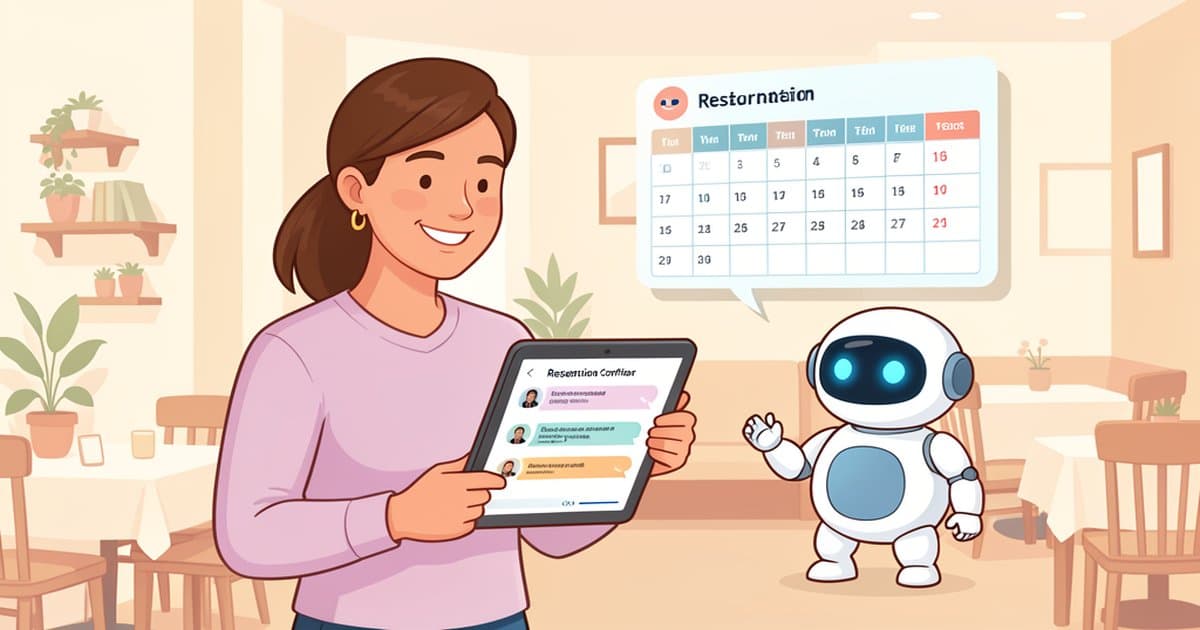
A missed phone call during service means a lost reservation. For a 40-cover restaurant receiving an average of 15 calls per evening, several slots go unfilled every week, not from lack of demand, but from lack of availability to answer. That was exactly the situation Thomas, owner of a Mediterranean restaurant in Marseille, was in before deploying a WhatsApp Business chatbot.
In one month, his bookings increased by 30%. Here is how he did it.
Why WhatsApp Over an Online Booking Form
Most restaurant owners think about adding a booking form to their website or joining a platform like LaFourchette. These solutions work, but they add friction for the customer, who needs to find the link, create an account, and wait for an email confirmation.
WhatsApp, on the other hand, is already installed on the phones of 87% of French people according to Statista 2025. Booking becomes as simple as sending a text to a friend. A Meta Business 2025 study on small businesses and messaging shows that customers who contact a business via WhatsApp convert 40% faster than those going through a web form.
For Thomas, the goal was not to replace the phone, but to capture requests arriving outside opening hours or during service, times when he simply could not pick up.
The 5 Setup Steps
1. Activate WhatsApp Business and access the API
The first step is creating a WhatsApp Business account, then requesting API access through an authorized provider like 360dialog or Twilio. This takes 24 to 48 hours. Without the API, connecting an automation tool like Manychat is not possible.
2. Configure Manychat to run the chatbot
Manychat is the tool Thomas chose to build conversation flows. It offers a no-code visual interface, ideal for a restaurant owner without technical skills. Flows include welcoming the customer, collecting the number of covers, the desired date and time, then sending an automatic confirmation.
For non-technical users, Comet (a browser automation agent) can also automate simple replies on WhatsApp Web without requiring an API, making it a good starting point for businesses that want to launch without a technical integration.
3. Connect Manychat to your calendar
Thomas uses Google Calendar to manage his slots. Manychat connects via Zapier to check availability in real time and automatically block the slot once a reservation is confirmed. This connection takes about two hours to set up.
4. Set up reminder messages
24 hours before the reservation, the customer automatically receives a reminder with the time and number of covers. They can confirm with one tap or cancel, which immediately frees the slot. Thomas saw a 20% reduction in no-shows through these reminders, in line with data from a Bpifrance Le Lab 2024 survey on independent restaurants.
5. Analyze performance weekly
Manychat provides a dashboard showing the number of open conversations, conversion rate to confirmed booking, and peak contact times. This data lets Thomas adjust available slots and anticipate high-demand periods.
Thomas's Results After One Month
Before the chatbot, Thomas averaged 45 reservations per week, 30 by phone and 15 online. After one month of the WhatsApp chatbot, he records 58 weekly reservations, a 29% increase, with a growing share of bookings received outside opening hours, between 10 PM and 8 AM.
Total monthly cost: 38 euros, including Manychat subscription and WhatsApp API fees.
What Usually Slows Down Action
A McKinsey 2024 survey on digital tool adoption in independent restaurants shows that 68% of owners acknowledge lacking time to explore and test new tools, even when they know they exist. The barrier is not budget, but the absence of an initial assessment that helps choose the right tool and avoid configuration errors.
This is exactly the value of a structured approach. A diagnostic and scoping phase identifies the tools suited to your specific situation before committing time or money.
What It Costs
- WhatsApp Business API (via 360dialog): roughly 10 to 15 euros per month for 500 to 1,000 messages.
- Manychat: 15 euros per month for the Pro plan, which includes advanced flows and integrations.
- Zapier: included in the free plan for moderate volumes, otherwise 20 euros per month.
For a restaurant that recovers two or three additional tables per week through this system, the return on investment is reached in the first week.
To assess whether this setup fits your restaurant type and reservation volume, feel free to get in touch.
Frequently asked questions
Do you need a paid WhatsApp Business subscription to deploy a chatbot?
The free WhatsApp Business app is sufficient to start. To automate messages at scale or connect a tool like Manychat, you need the WhatsApp Business API, which is paid based on message volume. For a restaurant with 30 to 60 covers, the monthly cost stays below 30 euros.
How long does it take to set up this system?
With guidance, the basic configuration (Manychat chatbot + calendar connection + confirmation messages) takes half a day. Setting up advanced scenarios (follow-ups, reminders, cancellation handling) adds another day.
Does this system work for a restaurant that takes reservations by phone?
Yes. The goal is precisely to move part of phone reservations to WhatsApp, a channel used daily by 87% of French people according to Statista 2025. The phone remains available for customers who prefer it.
How do you handle group bookings with a chatbot?
For groups above 6 people, the chatbot can automatically redirect to a specific form or trigger a manual confirmation message. This conditional logic can be configured in less than 30 minutes in Manychat.
Can the chatbot handle allergy or special diet requests?
Yes. You can add a step in the scenario that collects this information at booking time and passes it directly to your kitchen via an internal message or a note in your calendar.