AI Adoption in SMEs: Why the Two Weeks After Rollout Decide Everything
Initial training or post-rollout calibration: what actually determines whether an AI tool gets adopted by teams in SMEs, not just installed.
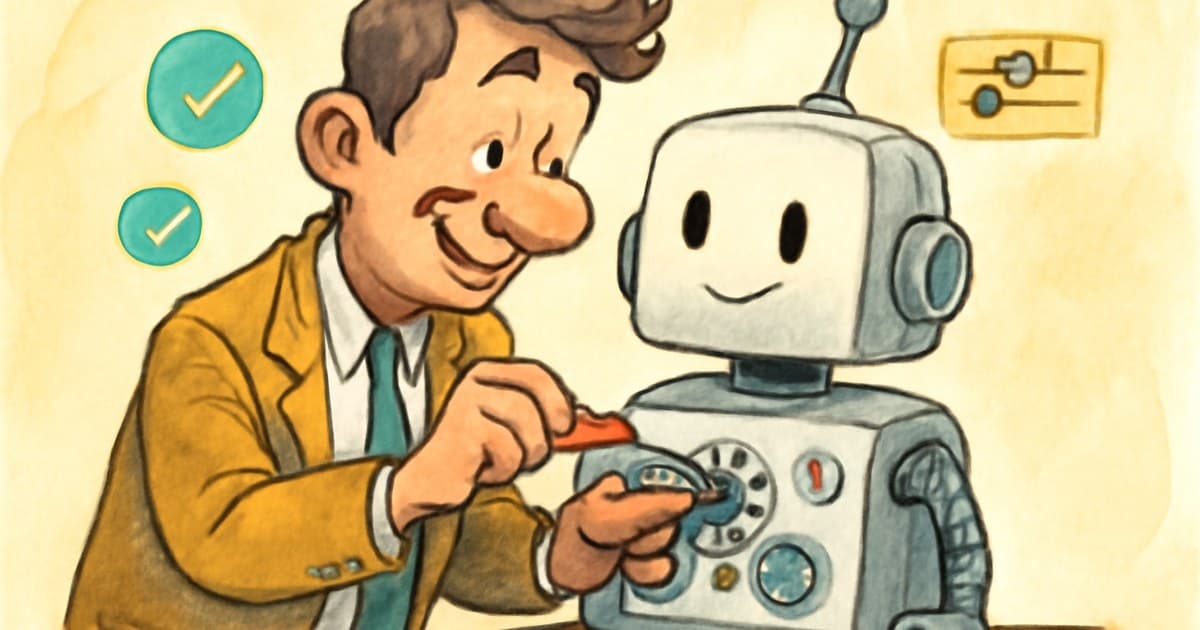
SMEs that spend at least two weeks calibrating their AI tools after rollout achieve a return on investment 47% higher than those that move straight from launch to routine use (Bpifrance, 2025). That figure shifts the central question of adoption: initial training is not what makes the difference, what happens right after it is.
In my engagements, I regularly see the same sequence play out. A tool is deployed on a Monday, presented in a single group session, then handed to teams with no close follow-up in the weeks that follow. The first prompts are clumsy, the workflows do not quite match the team's actual habits, and no one is tasked with adjusting either one. Three weeks later, the tool gets labeled "not a good fit," when in fact it was simply never calibrated to the team's real use cases.
This calibration is not an optional extra, it is precise work: gathering the concrete friction points reported by users in their first days of use, adjusting prompts and automations accordingly, then looping back with the team before workaround habits set in. Without this short cycle, the gap between what the tool could do and what it actually does widens as early as the second week, and it becomes costly to close once teams have settled into working around it.
This is exactly the role of change management in my engagements, which extends the adoption stage (weeks 4 to 6): never confuse making a tool available with genuinely embedding it into work habits. Field results from 47 Bordeaux-area SMEs supported in 2024 confirm this gap, an 89% success rate with a structured post-rollout follow-up method, versus 27% when adoption is left to teams' spontaneous initiative.
A leadership team budgeting an AI project should plan for calibration on the same footing as the license and the training, not as an option kept in reserve for when problems appear. It is this short adjustment cycle, not the enthusiasm of launch day, that determines whether an AI tool becomes a genuine work habit or a subscription renewed without a second thought. If you'd like to discuss it, get in touch.
Frequently asked questions
What is post-rollout calibration for an AI tool?
It is the period following a tool's launch during which prompts, automations, and workflows are adjusted to the actual friction points reported by teams, rather than left unchanged after the initial training session.
Why isn't initial training enough to guarantee AI tool adoption?
A training session presents the tool under ideal conditions, but a team's real use cases only emerge during the first days of actual use. Without adjustment at that point, the gap between the trained tool and the genuinely useful tool widens quickly.
How much time should be spent on calibration after deploying an AI tool?
SMEs that spend at least two weeks on this calibration achieve a return on investment 47% higher than those that move straight from launch to routine use (Bpifrance, 2025).
What is the success rate of structured AI adoption compared to spontaneous adoption?
Field results from 47 Bordeaux-area SMEs supported in 2024 show an 89% success rate with a structured post-rollout follow-up method, compared to 27% when adoption is left to teams' spontaneous initiative.
Where does post-rollout calibration fit in an AI rollout?
It falls within the adoption stage, usually in weeks 4 to 6, dedicated to ongoing team upskilling rather than a single launch event.
What is the role of the Change Management and Adoption pillar in an AI engagement?
It consists of training teams function by function, then tracking actual usage after rollout, to distinguish a tool that has been made available from one that is genuinely integrated into daily work habits.
What happens when no calibration is planned after deploying an AI tool?
Teams develop workaround habits within the first few weeks, and the tool ends up judged unsuitable when it was simply never adjusted to real use cases. This is a field observation from engagements run through nachnouchi.com, not an external quantified study.
How should an SME budget for calibration on an AI project?
On the same footing as the license and the training, from the initial scoping of the project, rather than as an option activated only once a problem has already been noticed.